A survey is only as good as its questions, and most surveys quietly lose before they're sent. A vague phrase here, a leading word there, two ideas crammed into one line, and the answers come back impossible to trust. The fix isn't complicated, but it is specific. This guide covers what separates a good survey question from a bad one, the five rules that catch most mistakes, a bank of 40+ examples you can copy by use case, and the loaded and double-barrelled questions to stop asking.
What Makes a Good Survey Question
A good survey question is one that every respondent reads the same way and can answer honestly. That's the whole test. If two people could reasonably interpret the wording differently, or if the phrasing nudges them toward a particular answer, the data is broken before anyone opens a chart. Good questions are clear, neutral, and focused on a single idea, which sounds obvious until you start writing them and notice how easily all three slip.
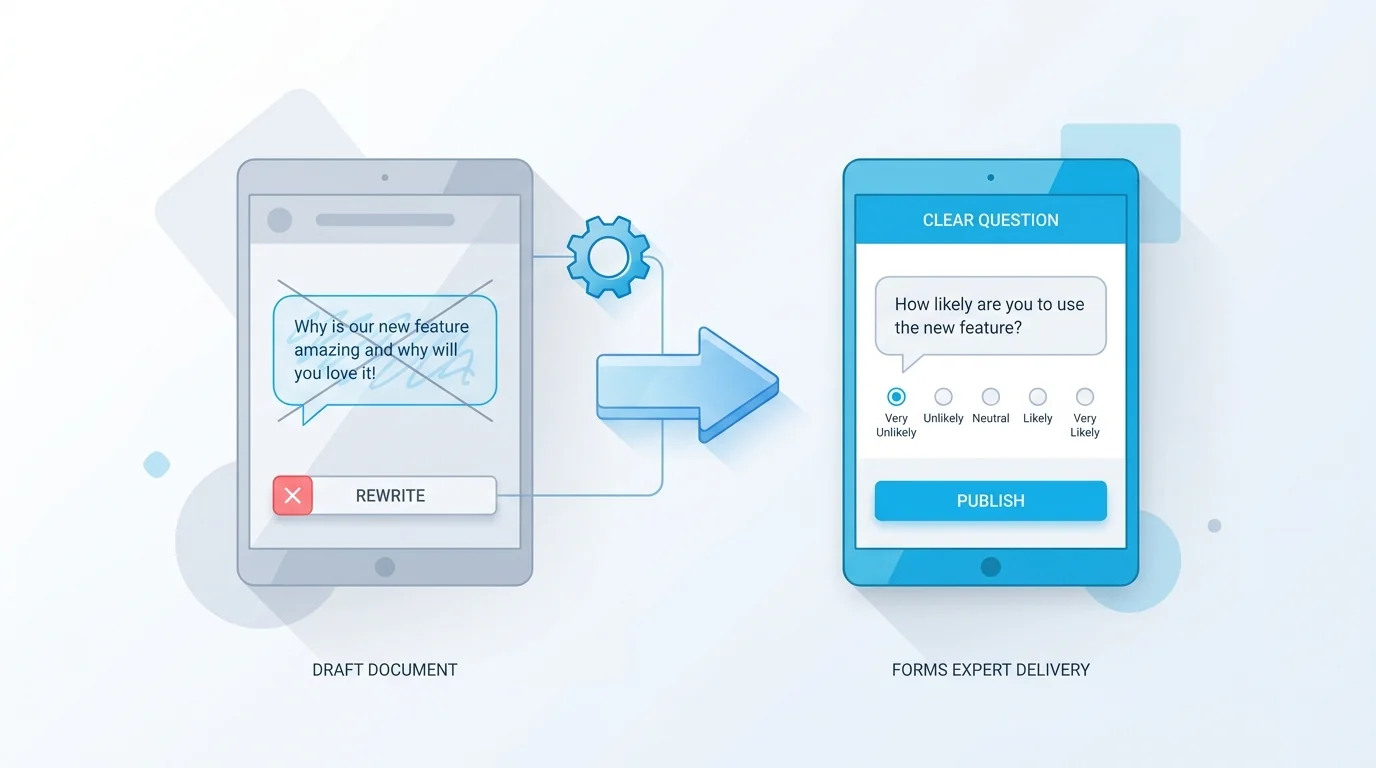
Think of it as protecting the answer. Every choice you make (the words, the scale, the order) either keeps the respondent's honest opinion intact or distorts it. A question like "how satisfied were you with our fast, friendly support?" has already decided the support was fast and friendly, so a dissatisfied customer has to argue with your premise before they can answer. Strip the adjectives and the same question becomes usable. The Pew Research Center's work on writing survey questions is the definitive deep dive if you want the research behind why small wording changes move results so much.
It helps to remember what a bad question actually costs. It doesn't just produce one weak data point, it quietly corrupts the average, because the people who misread it answer a slightly different question than the people who read it as intended. You can't see that damage in the results, which is what makes it dangerous. A clean question fails loudly (people skip it); a subtly biased one fails silently and still gives you a number that looks trustworthy.
One more thing worth saying up front: a good question is also one you'll actually use. If the answer can't change a decision you're going to make, it isn't a good question for this survey, no matter how cleanly it's written. Clarity and neutrality keep the data honest. Relevance keeps the survey short enough that people finish it.
5 Rules for Writing Good Survey Questions
Five rules catch the large majority of survey mistakes. Run every question past them before it goes out.
1. One idea per question. The most common mistake is the double-barrelled question: "how would you rate our speed and pricing?" If someone loves your speed and hates your price, they can't answer truthfully, so they pick something in the middle and you learn nothing. Split anything with an "and" or an "or" into separate questions.
2. Keep the wording neutral. A question shouldn't reveal the answer you're hoping for. Drop praise words ("our excellent support"), drop assumptions ("how much did you enjoy..."), and don't bundle a justification into the question. Neutral phrasing feels almost too plain when you write it, and that flatness is the point.
3. Use plain, accessible language. Write for the least specialist person who'll answer. Cut jargon, acronyms, and internal product names that respondents won't recognize. "How long did it take to get your first result?" beats "how would you rate your time-to-value?" every time. The University of Pittsburgh's tips for writing good survey questions is a tidy reference on accessible wording.
4. Pretest before you send. Show the draft to three or four people who resemble your audience and watch where they hesitate. A question that makes sense in your head but trips up every tester is a question that'll trip up a thousand respondents. Pretesting is the cheapest quality step in the whole process, and the one people skip most.
5. Match the question type to the goal. A number you'll track over time wants a rating or a scale. A list of known options wants multiple choice. A reason you can't predict wants an open box. Picking the wrong format is its own kind of bad question, and our guide to the types of survey questions walks through which format fits which goal.
If you only remember one thing, make it this: a good question gives away nothing about the answer you want. Clarity, neutrality, plain language, and pretesting are all really in service of that single idea. Write the question so that a happy customer and an unhappy one can both answer it without arguing with the wording first, and most of the other rules take care of themselves.
Good Survey Questions Examples by Use Case
Here's the bank. These are written to be copied and adapted, grouped by the survey you're most likely running. Swap in your product or context and keep the neutral phrasing.
Customer satisfaction questions:
- How satisfied are you with your purchase overall?
- How easy was it to get the help you needed?
- How well does the product meet your needs?
- How likely are you to buy from us again?
- What almost stopped you from completing your order?
- How did we compare to what you expected before buying?
- What is one thing we could do better?
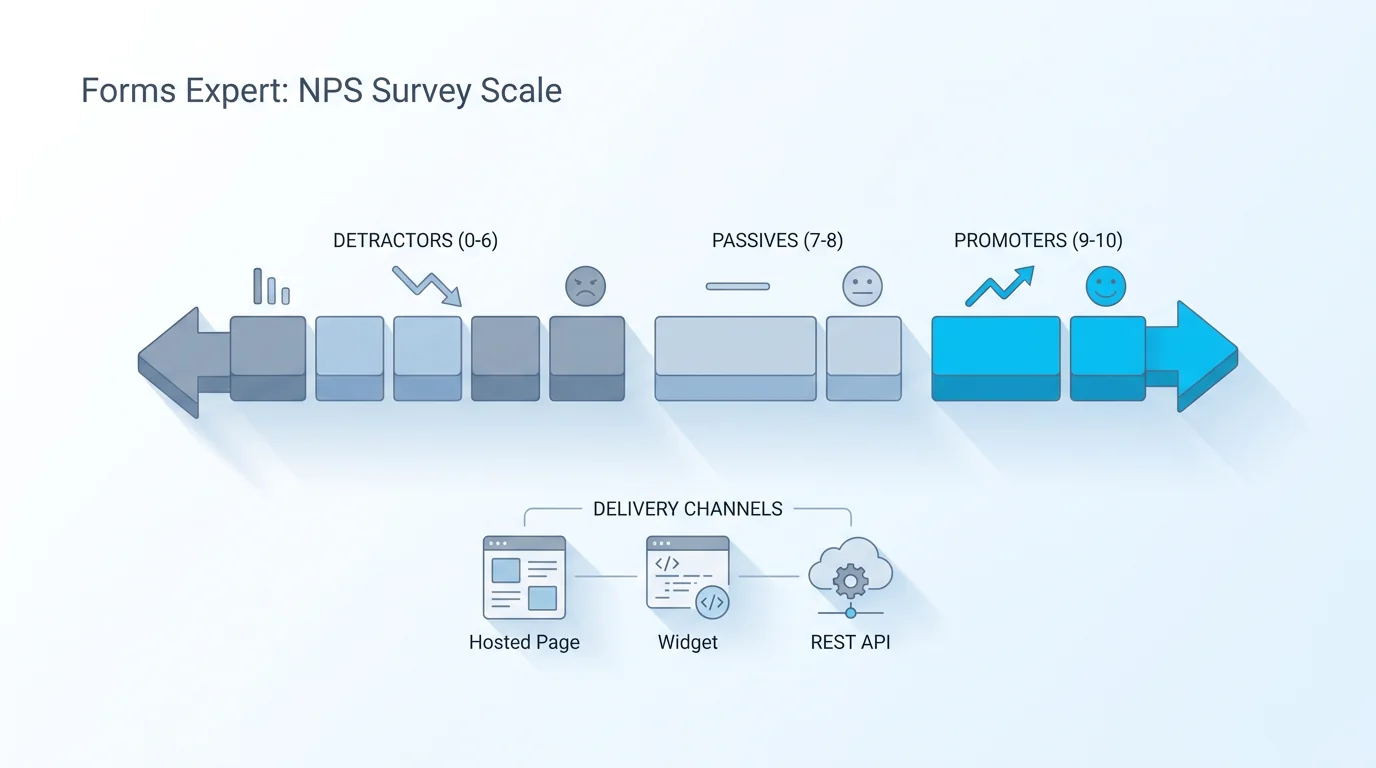
- How likely are you to recommend us to a friend or colleague?
Product feedback questions:
- How often do you use the product?
- Which feature do you rely on most?
- Which feature do you wish worked differently?
- How easy was it to get started?
- When something goes wrong, how easy is it to recover?
- What were you trying to do the last time you got stuck?
- How well does the product fit into your existing workflow?
- If the product disappeared tomorrow, what would you miss most?
Employee and team questions:
- How clear are you on what's expected of you in your role?
- How supported do you feel by your manager?
- How comfortable are you raising concerns with leadership?
- How well do the tools you're given fit the job?
- How manageable is your current workload?
- What would make the biggest difference to your day-to-day?
- How connected do you feel to the team's goals?
Post-event questions:
- How would you rate the event overall?
- Which session was the most useful to you, and why?
- How well did the event match what was advertised?
- How likely are you to attend again?
- What topic would you want covered next time?
- How was the pace, too slow, about right, or too fast?
- What's one thing we should change for next time?
Website and UX questions:
- Were you able to find what you came for today?
- What almost made you leave the page?
- How easy was it to understand what we offer?
- Was anything confusing or missing?
- How would you rate the speed of the site?
- What were you hoping to do that you couldn't?
- How did you first hear about us?
Market and pricing research questions:
- How much would you expect to pay for something like this?
- At what price would this start to feel too expensive?
- At what price would it feel so cheap you'd question the quality?
- Which of these options would you choose, and why?
- What would you most likely use instead of us?
- How important is price next to the other things you weigh?
- What would make this an easy yes for you?
That's 40-plus to start from. Notice how few of them carry an opinion: most ask "how" or "what" and leave the verdict entirely to the respondent.
Open-Ended vs Closed-Ended Survey Questions
Good questions come in two shapes, and knowing when to use each is half the craft. A closed-ended question gives a fixed set of options, so it's quick to answer and easy to count. An open-ended question leaves a blank box, so it's slower but catches things you didn't think to ask.
Closed-ended questions do the measuring. Multiple choice, rating scales, and Likert scales all let you put a number on opinion and watch it move over time. Open-ended questions do the discovering. "What almost stopped you from signing up?" surfaces objections in the customer's own words, often the exact phrasing your marketing should be using. The catch is effort: open questions cost the respondent more, and they cost you reading time, so they earn their place near the end of a survey and in small numbers.
The honest answer to "which should I use?" is usually both. Lean on closed questions for the bulk of the survey so you get clean numbers, then add one or two open questions for the surprises. If you want the full breakdown of every format and when it fits, the types of survey questions guide is the companion to this one. The short version: close the question when you know the possible answers, open it when you don't.
A rough ratio helps in practice: aim for most of the survey to be closed questions and reserve one or two open ones, usually near the end. Too many open questions and your completion rate falls off a cliff, since typing is real work. Too few and you only ever hear back about the things you already knew to ask. One well-placed open question, like "what almost stopped you?", often earns more than five extra rating scales.
Bad Survey Questions to Avoid
Bad questions usually fail in one of a few predictable ways. Each has a quick fix once you can name it. The table pairs the common problems with a bad example and a better version you can borrow.
The pattern underneath all of them is the same: a bad question does some of the answering for the respondent, or asks for more than one thing at once, or assumes a fact that might not be true. Read each of your questions out loud and ask whether a person who disagrees with you could still answer it comfortably. If they can't, you've found a leading or loaded question. The UK Government's questionnaire design guidance catalogues these failure modes in more detail if you want a formal checklist to test against.
| Problem | Bad question | Better version |
|---|---|---|
| Double-barrelled | Was our staff friendly and knowledgeable? | Split it: "Was our staff friendly?" and "Was our staff knowledgeable?" |
| Leading | How great was our award-winning support? | How would you rate your experience with our support? |
| Loaded (built-in assumption) | Where do you skip the docs before asking support? | When you have a question, where do you look first? |
| Absolutes | Do you always read our release notes? | How often do you read our release notes? Never to always |
| Vague | Do you use the product often? | How many times did you use the product last week? |
| Jargon | How would you rate your onboarding TTV? | How long did it take to get your first result? |
How Long Should a Survey Be
Shorter than you want it to be. Every question you add costs completions, and the drop gets steeper the longer the form feels. There's no magic number, but a focused survey of five to ten good questions almost always beats a sprawling one of thirty, because the people who would have quit at question twenty-two actually finish.
The useful discipline is to start from the decision, not the question list. Write down what you'll do differently depending on the answers, then keep only the questions that feed those decisions. If an answer wouldn't change anything, the question is costing you completions for nothing. Order matters too: open with easy, low-stakes questions to build momentum, put the effortful ones (ranking, long open text, sensitive demographics) near the end once people are invested, and never lead with "what's your income?"
There's a real trade-off here worth naming. More questions feel like more insight, and it's tempting to ask everything while you have someone's attention. But a half-finished survey teaches you less than a short one that people complete, so the restraint pays off twice: better completion rates and cleaner data from respondents who weren't rushing to escape.
A practical way to find your length: build the survey, then cut it by a third before sending. Almost every draft has questions that felt essential while writing and turn out to be curiosity rather than need. The third you remove is rarely missed, and the completion rate you gain from the shorter form usually tells you more than the questions you dropped ever would have.
Turn Good Questions Into a Live Survey
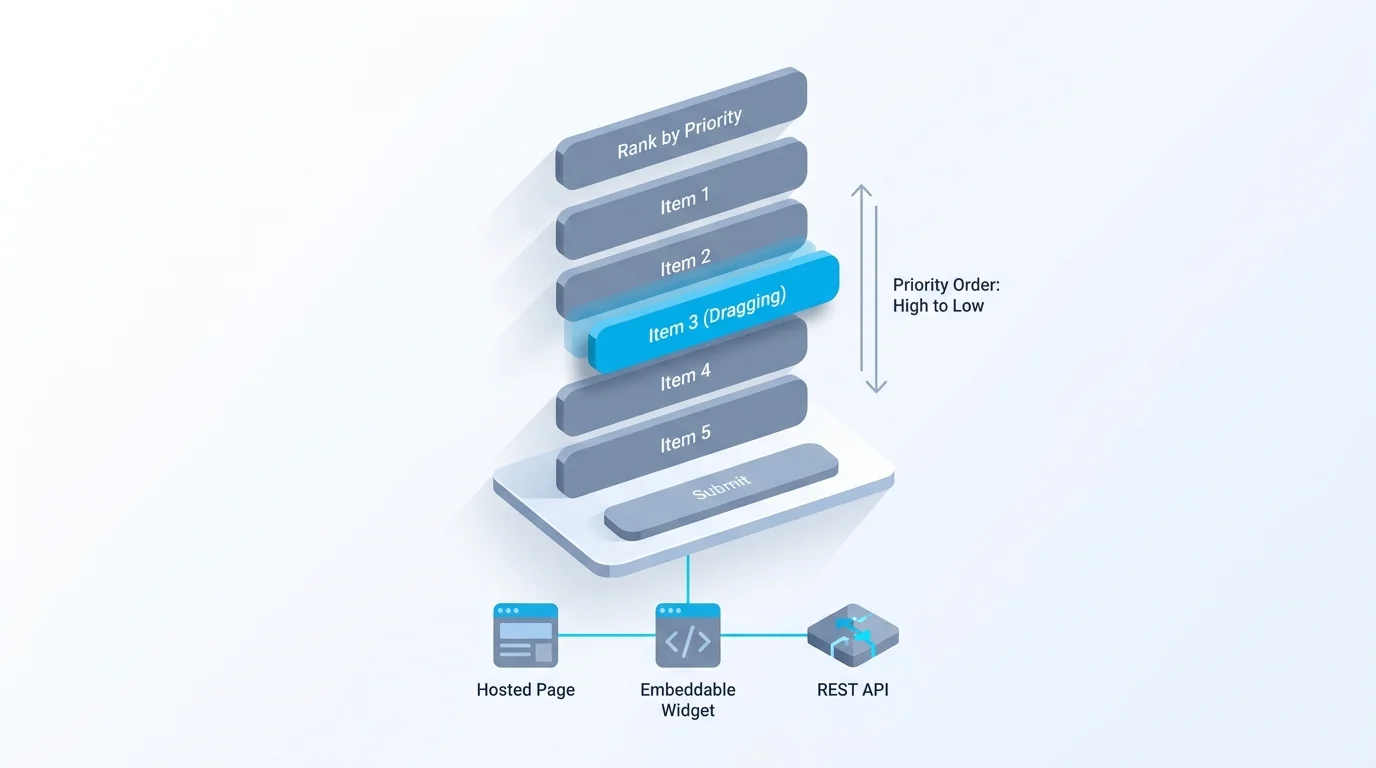
Once the questions are written, building the survey is the easy part. In Forms Expert, every question type in this guide (multiple choice, rating, Likert, open text, ranking, and demographic fields) is available on every plan, including Free, so you can mix the formats your questions actually call for. Group related questions, keep the form short, and use conditional logic to show follow-ups only when they're relevant, which keeps a survey feeling shorter than it is.
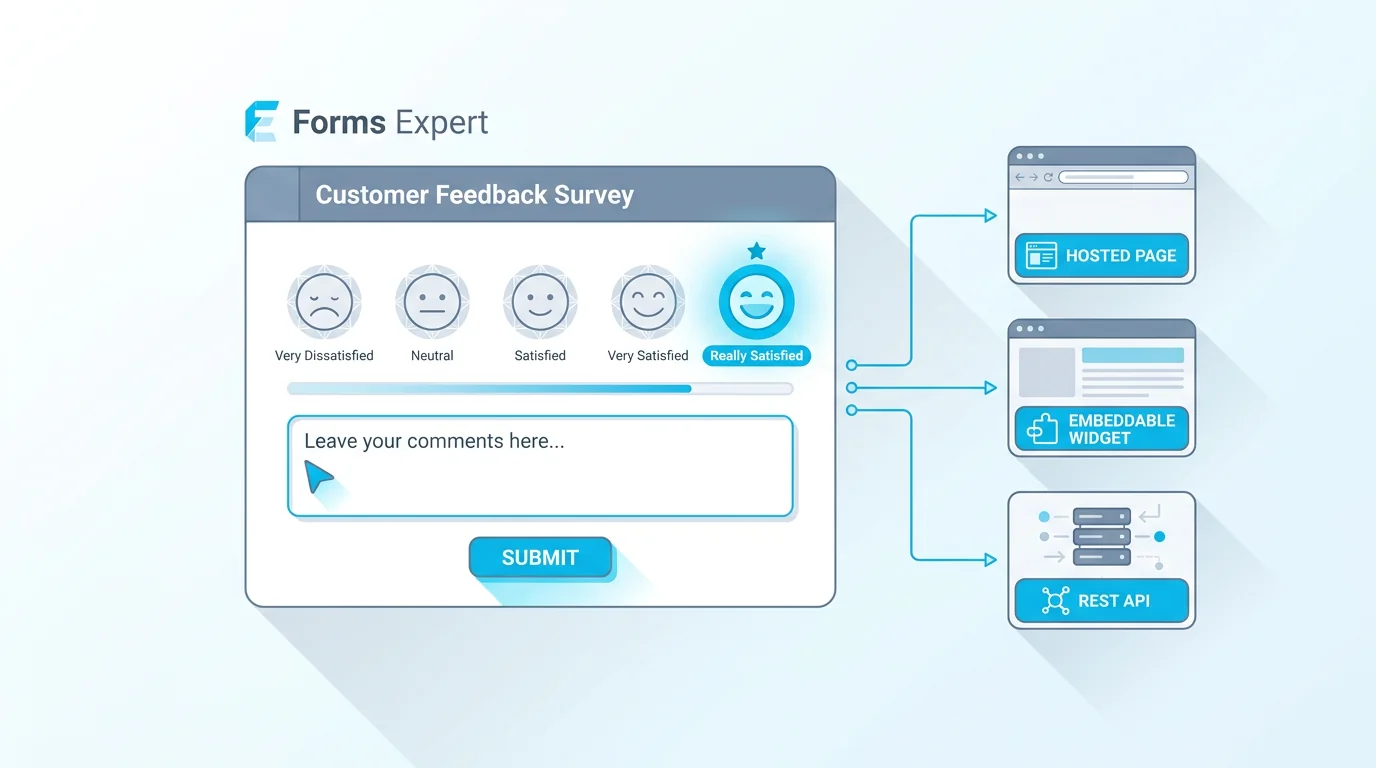
When you publish, the same survey ships as a hosted page, an embeddable widget, or a REST endpoint, so it meets people wherever they already are, on a site, in an email, or inside your own app. If you'd rather not start from a blank page, the survey templates come with sensible questions already laid out, and a customer feedback survey is one of the most common places to start.
The honest note on analysis: collecting responses and reading a basic results overview is all-plans, while per-field breakdowns and trend tracking are part of the Pro analytics. So you can run a full survey on Free and upgrade only when you want the deeper reporting. Write clear, neutral, single-focus questions, keep the list short, and the survey will mostly take care of itself from there. Start from the home page when you're ready to build.
Frequently Asked Questions
A good survey question is one that every respondent reads the same way and can answer honestly. In practice that means three things: it's clear (no ambiguous wording), it's neutral (it doesn't reveal the answer you're hoping for), and it's focused on a single idea rather than two crammed together. A useful test is to imagine someone who disagrees with you reading it. If they can still answer comfortably, the question is probably fine. If the wording argues with them first, it's leading or loaded and needs a rewrite. The last quiet rule is relevance: a good question is one whose answer will actually change a decision you're going to make.